


Vintage Dior Trotter vs Oblique: How the Monogram Has Changed

The terms Vintage Dior Trotter and Dior Oblique frequently appear in vintage listings, sometimes describing bags that look remarkably similar. This can make it difficult to understand whether they refer to two different patterns, two different periods or simply different names for the same Dior monogram.
The distinction is not always absolute. Oblique is the historic name of Dior’s repeating monogram, while Trotter is commonly used in the vintage market for certain older monogram canvas bags, particularly those associated with the late 1990s and early 2000s. This guide explains how the terms are used and what to consider when identifying a vintage Dior monogram bag.
The Origin of Dior Oblique
The Dior Oblique motif was created under Marc Bohan in 1967 and presented publicly in 1969. Its repeated, diagonally arranged Dior lettering became one of the house’s most recognisable textile patterns.
The motif appeared across luggage, handbags and accessories before being reinterpreted by later creative directors. John Galliano used Dior monogram canvas extensively during his time at the house, including on Saddle bags and many colourful early-2000s accessories.

What Does Dior Trotter Mean?
Trotter is a name commonly used by vintage sellers and collectors for older Dior monogram canvas pieces. It is particularly associated with navy and beige canvas, although pink, red, brown, black and other colourways can also be found.
Vintage Trotter pieces appeared in many shapes, including:
Saddle bags
Boston and bowling bags
Shoulder bags
Totes and shoppers
Pochettes and small accessories
However, resale terminology is inconsistent. The same bag may be described by one seller as Trotter and by another as vintage Dior Oblique.
Are Trotter and Oblique the Same?
They belong to the same wider Dior monogram history, but the terms are often used to suggest different periods or interpretations.
Oblique is Dior’s established name for its historic monogram motif. Contemporary interpretations often appear in densely woven jacquard, as seen on the modern Dior Book Tote.
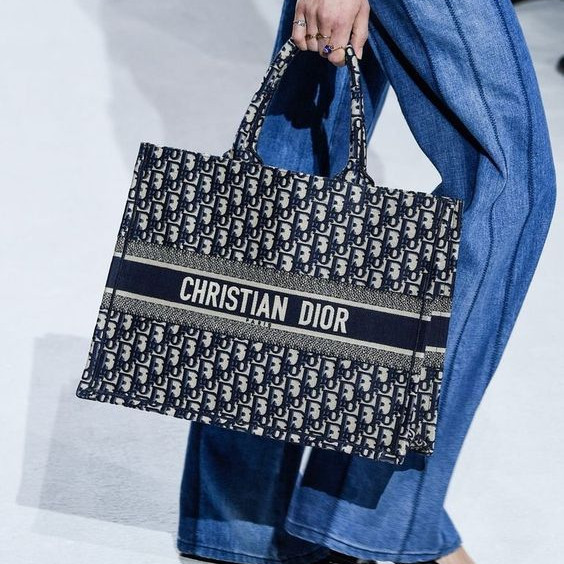
Trotter is a name commonly used in the vintage resale market for older Dior monogram canvas pieces, especially designs popular during the late 1990s and early 2000s.

Rather than treating Trotter and Oblique as two completely separate patterns, it is more useful to understand them as different names and interpretations within the wider history of Dior’s monogram.
How to Identify the Period of a Vintage Dior Monogram Bag
The monogram alone cannot determine a bag’s exact year. Look at the complete design, including:
The shape and proportions of the bag
Canvas colour and texture
Leather trim and handle construction
Zip pulls, buckles and other hardware
Interior label and production code
Whether the design is consistent with a known Dior collection
Galliano-era examples often use stronger colours, decorative hardware and recognisable Y2K silhouettes. Earlier vintage pieces may have simpler shapes and more understated leather trim.
A production code can provide additional information, but it should always be considered alongside the bag’s construction and design.
What to Check Before Buying
Condition can vary significantly between vintage monogram bags. Before buying, examine:
Fading, discolouration or stains on the canvas
Rubbing around the corners and edges
Cracking or dryness on leather handles and trim
Loose stitching around the zip and strap attachments
Interior peeling, stains or odour
Tarnishing and scratches on the hardware
Some colour variation is natural, especially on bags that are more than twenty years old. The important question is whether the wear is mainly cosmetic or whether it affects the bag’s structure and everyday use.
Which Version Is Right for You?
Vintage Trotter pieces may appeal to buyers looking for lighter canvas, early-2000s colours and discontinued Dior silhouettes. Contemporary Oblique bags generally offer a newer construction and a more consistent finish. For vintage collectors, the attraction often lies in the complete combination of era, shape, colour and condition—not simply whether the listing calls the pattern Trotter or Oblique.
At WHY YOU VINTAGE, we examine each vintage Dior bag individually, considering its design, construction and condition. Explore our current Dior collection or contact us if you are searching for a particular monogram style.


Comments